I was re-reading Rice's architectural primerhttps://www.goodreads.com/en/book/show/7535080-rice-s-architectural-primer , and vaguely attempting to learn about architecture. It's a great book, and traces the history of British architecture with some lovingly hand drawn diagrams.
It proceeds chronologically through the phases of British history, and therefore begins at the beginning: classical architecture. You see quite a lot of classical architecture in the UK, especially in London.
Classical architecture seems to crop up in nations that style themselves as the new Romans: The national mall in Washington DC, capital of the American republic, the Holy Roman Empire in Vienna, the British empire. Fascist German and Italian governments also incorporated it into their designs.
But classical architecture isn't covered because there are tonnes of purely classical buildings: The book says that the reason it's so central to understanding architecture, is that so much of the rest of architecture is built upon the foundation of classical architecture
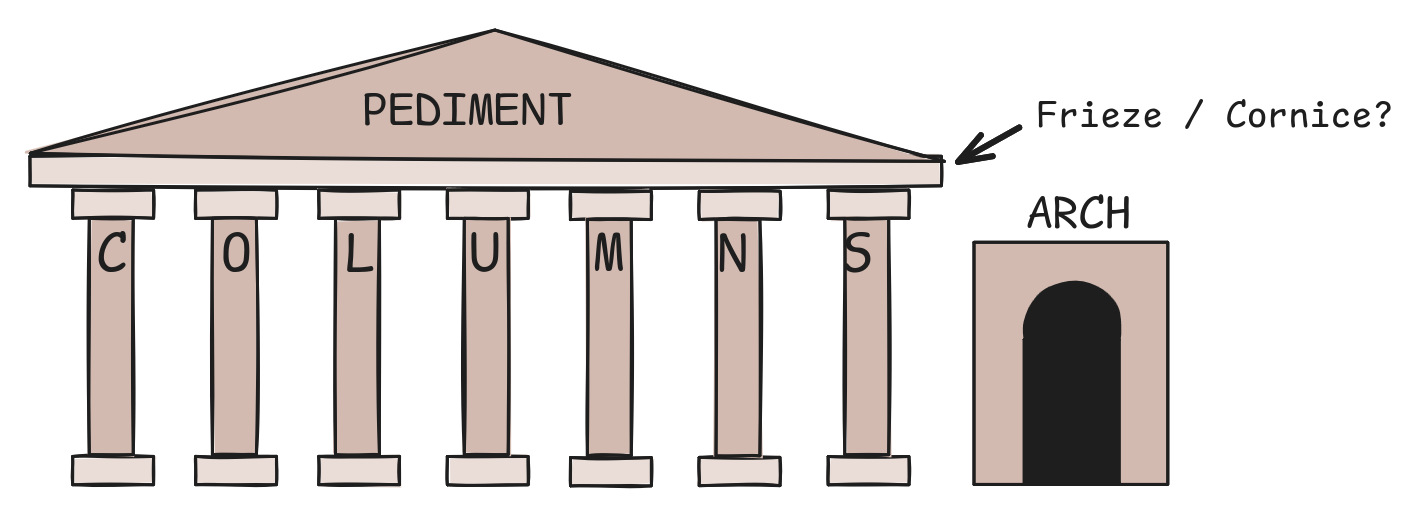
It lays out the key elements of classical architecture, the building blocks that are re-used, for example pediments, columns, and arches:
especially since the renaissance when Inigo Joneshttps://en.wikipedia.org/wiki/Inigo_Jones brought back classicism and Palladianism to the UK from Italy.
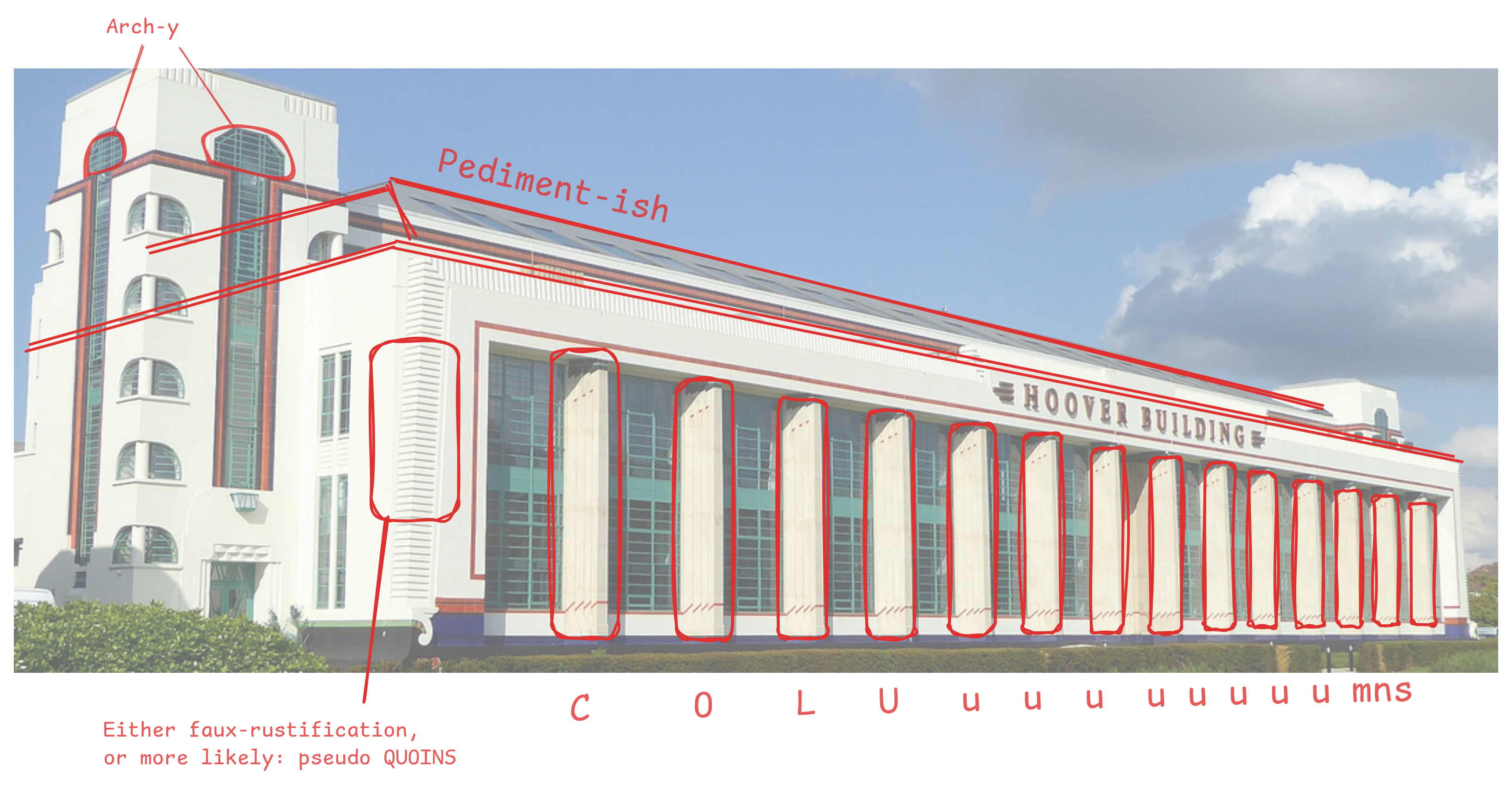
This is even reflected in modern modern architecture, for example the Hoover buildingnot that hoover building, although I actually like that architecture too , which is famously art deco, but we can see classical influences.
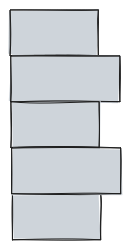
Pseudo QUOINs: https://en.wikipedia.org/wiki/Quoin
There's another interesting list of Pediments in post-modern architecture here: https://en.wikipedia.org/wiki/Pediment#Postmodern_reinterpretations.
ORDERS
One of the key elements of columns is the orderhttps://en.wikipedia.org/wiki/Classical_order : this is linked to both the decoration, and the proportion, the ratio between column width, and height.
The different orders have different height-diameter ratios, typically expressed as a maximum and minimum range, this gives the buildings their different impressions. Some are squat and strong, and others tall and elegant
| Order | Min Ratio (H:D) | Max Ratio (H:D) |
|---|---|---|
| Tuscan | 6:1 | 7:1 |
| Doric | 6:1 | 8:1 |
| Ionic | 8:1 | 9:1 |
| Corinthian | 9:1 | 10:1 |
| Composite | 9:1 | 10:1 |

A common way of utilising the different orders is to layer them within a single building, referred to as superimposition of orderhttps://chestofbooks.com/architecture/Cyclopedia-Carpentry-Building-7-10/Superposition-Of-The-Orders.html . This is the idea that the different orders are used at different levels of a building, Tuscan or Doric at the bottom, Followed by Ionic and corinthian.
This is mirrored in modern buildings. A common pattern in fancy houses is using the superimposed order to create the Piano Nobile, the noble floorhttps://architecturalobserver.com/the-piano-nobile/ , elevated above the ground.
The bottom floor is reserved for more everyday functions such as servants quarters, pantries, garages. The Bottom floor is often Rusticatedhttps://en.wikipedia.org/wiki/Rustication_(architecture) : made to look more rough /fortified, often with kind of fake carved brickwork
Not only are the different storeysI'm using 'storey' here cos it's the fancy architectural term for a floor of a building styled differently, they typically have different heights. The lower storey is squattish, kind of like a skirting board. The first storey is high ceilinged, and the top storey (known as the "ATTIC STOREY") is less tall.
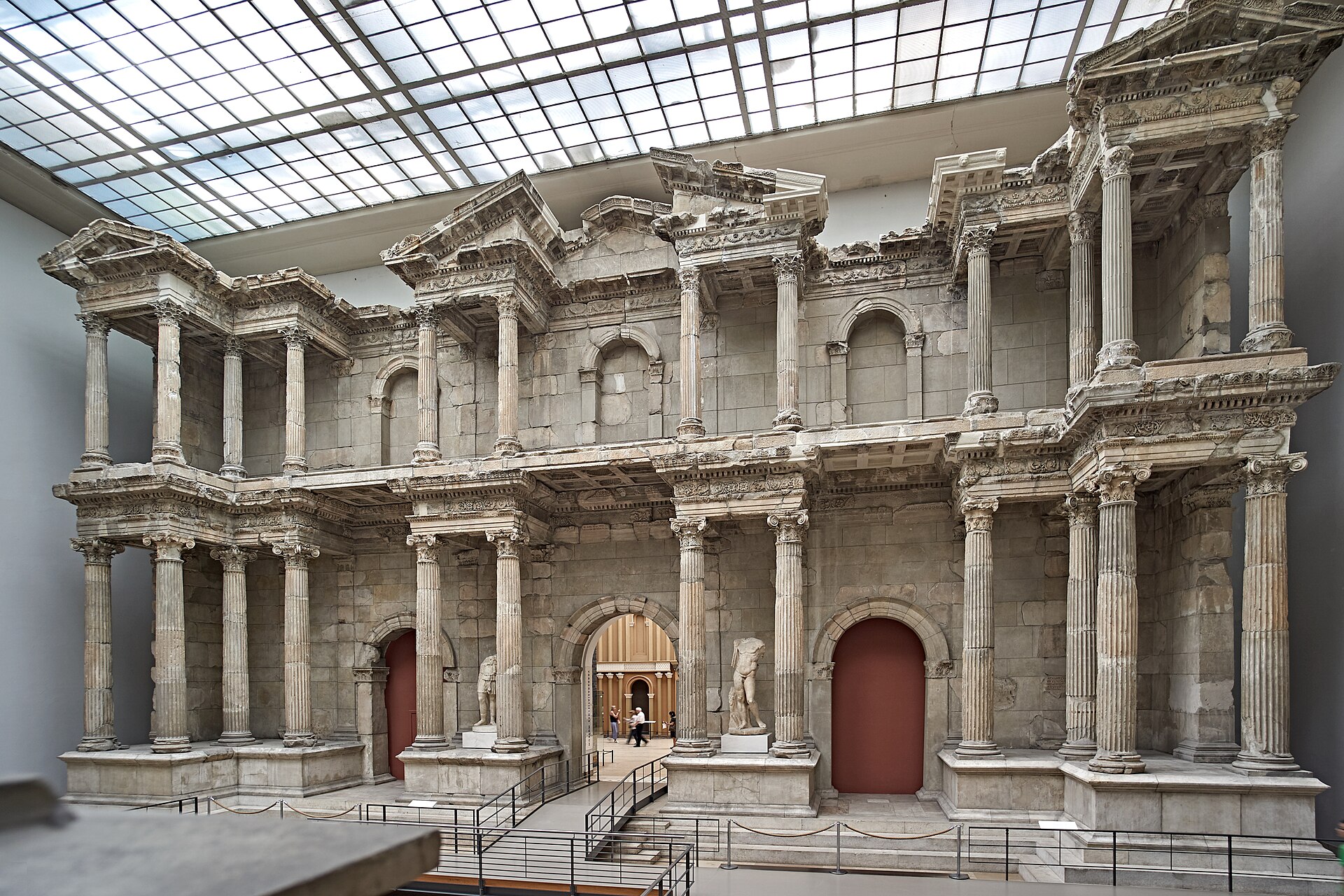
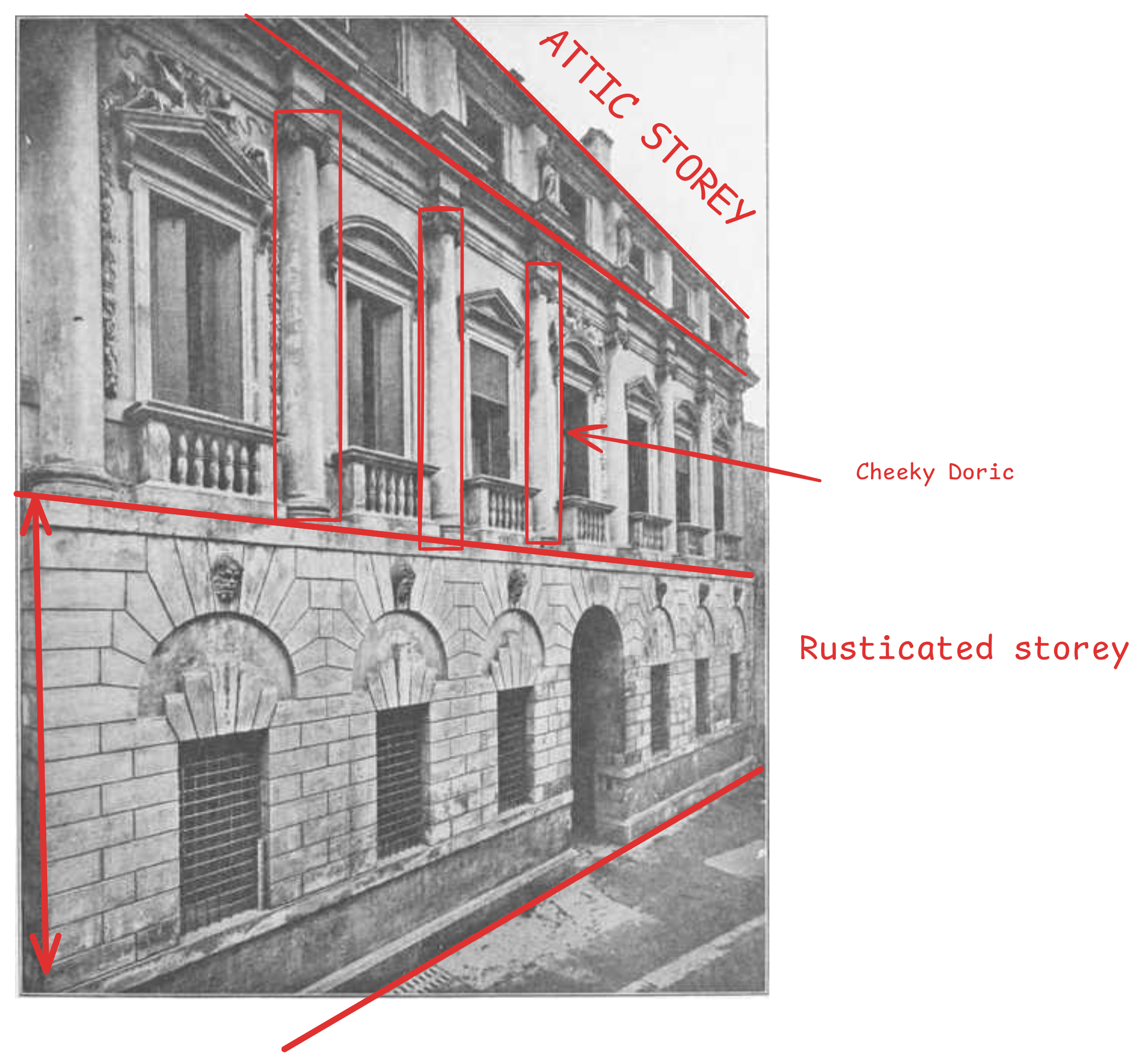
Once you've seen this pattern you can begin to see it everywhere. Including... in websites
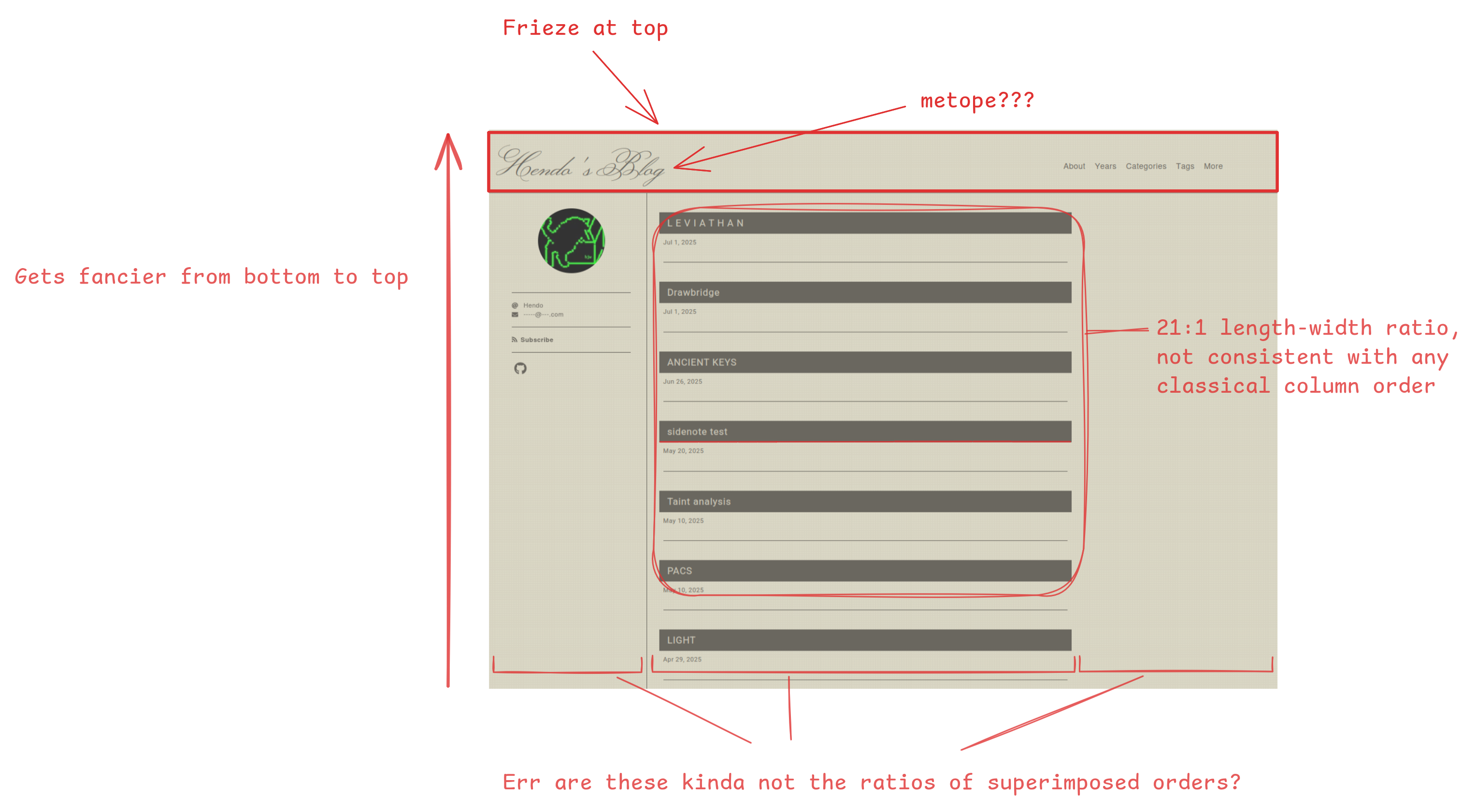
Is web design inspired by the superimposed order of classical architecture? Is there a pleasing ratio between storeys / header and footer we gravitate towards? Is this somehow related to the same ideas of proportion found in Vitruvius's proportions of man?
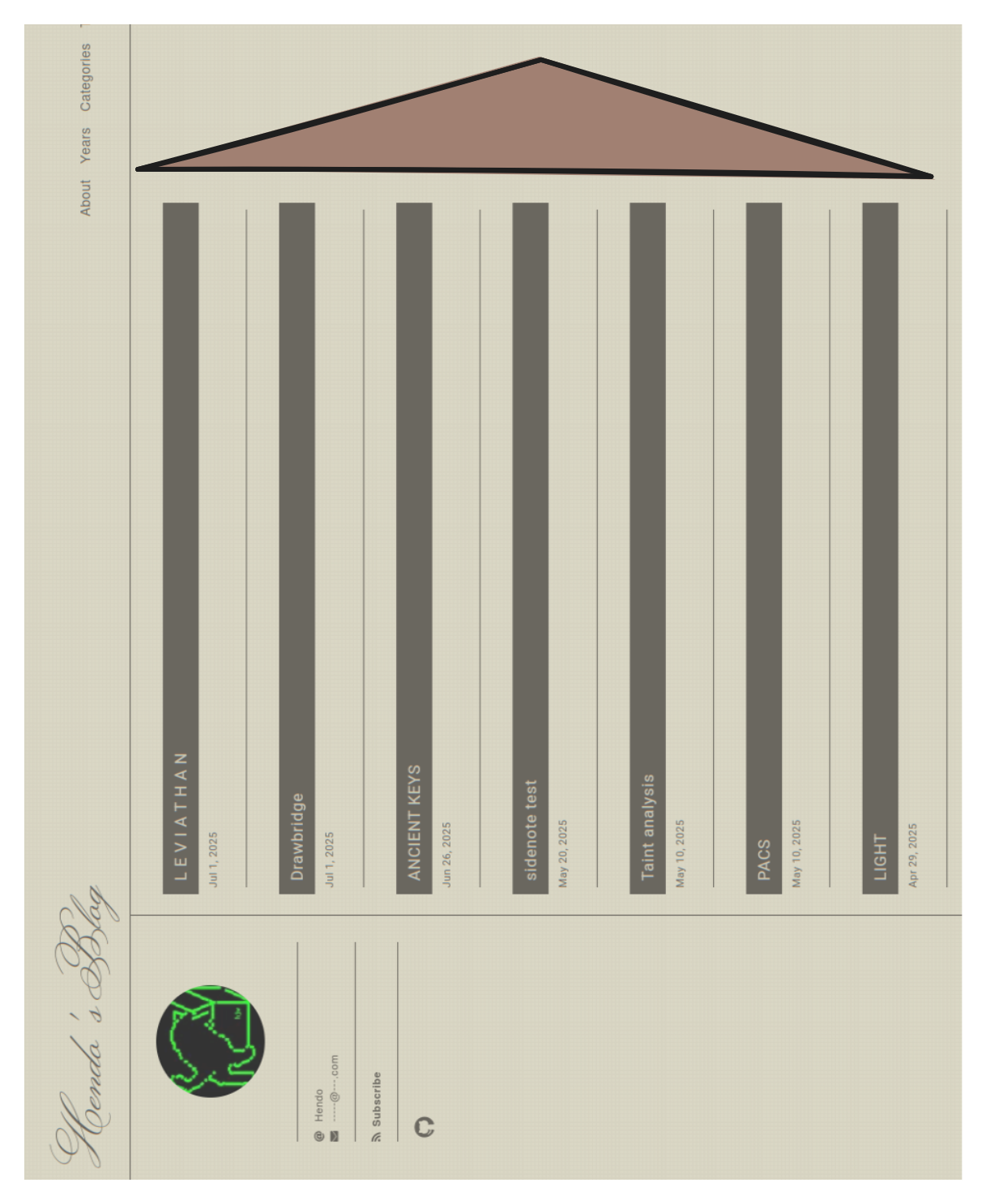
Maybe I'm going a bit mental, but it is a fun idea. And at the end of the day, I think it works, because if you flip the home page on it's side and draw a triangle, it kinda looks like the parthenon...